

How sensor-based sorting improves e-waste recycling in Australia
Total Green Recycling (TGR) processes around 5,000 tonnes of e-waste annually at its Western Australian facility. With STEINERT sensor-based sorting technology integrated into its processing line, the company is improving material recovery, product quality and process consistency while preparing for further growth.
Led by CEO Ram Kalyanasundaram, TGR processes around 22–25 tonnes per operating day, including televisions, computers, monitors, printers and other electrical and electronic equipment.
♻️ Making complex e-waste streams sortable
The facility targets ferrous and non-ferrous metals, printed circuit boards, copper-rich and aluminium-rich fractions, as well as recoverable plastics.
However, changing product designs, material composition and battery content make e-waste increasingly difficult to process. Customers and regulators also expect higher recovery rates, improved traceability and stronger environmental performance.
One important finding was how much valuable material could still be recovered from what initially appeared to be a mixed, low-value stream. Advanced sorting helped make this recovery potential visible.
⚙️ Sensor-based sorting at the heart of the process
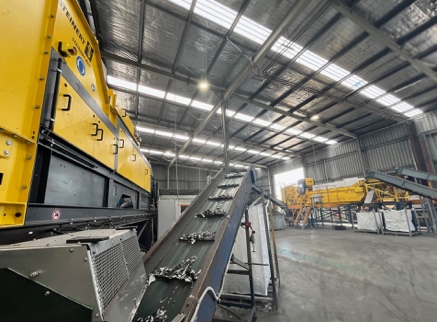
Two STEINERT systems play key roles in TGR's processing line:
-
STEINERT KSS CLI – a combination sensor sorter integrating colour, 3D and metal detection.
-
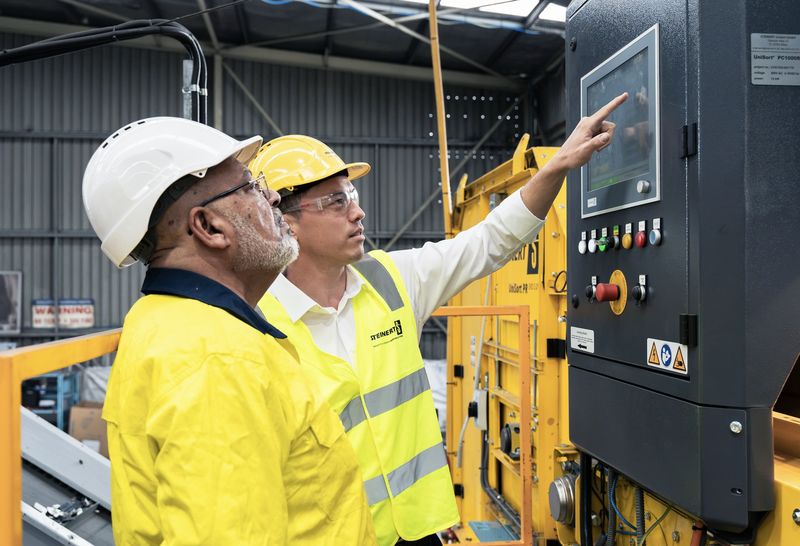
STEINERT UniSort PR EVO 5.0 – uses near-infrared detection to separate targeted material fractions, particularly printed circuit boards.
Following initial size reduction and mechanical separation, both systems identify and separate material fractions more precisely. Their accuracy, consistent performance and adjustable sorting recipes help manage highly variable feed material, reduce contamination and improve the quality of recovered products.
“Modern e-waste recycling is not simply about processing more tonnes. It is about recovering cleaner, higher-value materials consistently and returning them to the circular economy. STEINERT technology has helped us move closer to that goal,” says Ram Kalyanasundaram.
Automation creates room for further growth
As incoming volumes and material variety increase, manual sorting alone can no longer provide the consistency and scalability required.
TGR worked with STEINERT to test, refine and adapt the sorting solution to its specific e-waste stream. The collaboration involved reviewing results, adjusting settings, improving material preparation and drawing on STEINERT's technical expertise.
Looking ahead, TGR plans to further optimise sorting recipes, use operating data to improve quality and throughput, and develop markets for recovered plastics and higher-value metal fractions. The company is also reviewing technologies and processes to address the growing presence of embedded batteries.
“I want Total Green Recycling to be recognised as a benchmark for safe, transparent and high-quality e-waste recycling in Australia,” says Ram. “That means continuing to grow but growing responsibly by recovering more value from every tonne.”