





Digital Product Passports Explained: the Best Reference Book to Start With
As Digital Product Passports move from regulatory concept to operational reality, a growing number of professionals, companies, and individuals are looking for a clear entry point into the topic. Yet, much of the available content remains either highly technical or narrowly focused on compliance, particularly in relation to the Ecodesign for Sustainable Products Regulation (ESPR).
This creates a gap. Understanding a the Digital Product Passport (DPP) requires more than knowing what a DPP is. It requires understanding how product-level data connects to sustainability, business strategy, and real-world decision-making.
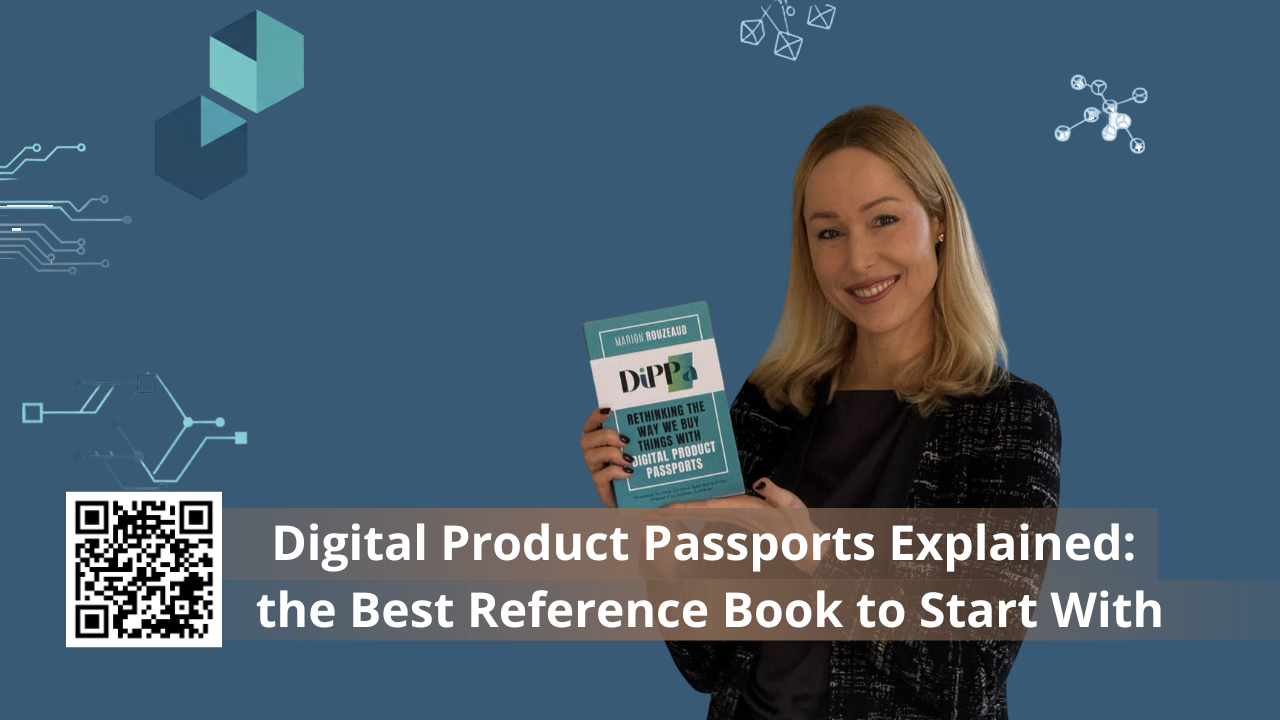
This is where the newly released book by Marion Rouzeaud "DiPPa: Rethinking the Way We Buy Things with Digital Product Passports" stands out, not simply as an introduction, but as a structured way to make sense of a rapidly evolving and increasingly complex space.
Digital Product Passports promise unprecedented transparency. For the first time, detailed information about materials, production conditions, lifecycle impacts, and end-of-life pathways becomes accessible at the product level. But this transparency comes with a challenge. The volume and complexity of data risk overwhelming both businesses and consumers. Without a way to structure and interpret this information, more data can lead to confusion rather than clarity.
This is precisely the gap many readers recognize when approaching the topic:
“In my opinion, this is the best introductory book on Digital Product Passports currently available. It explains the topic in a clear and structured way while connecting regulation, lifecycle thinking, and practical business implications.”
The need is no longer only for information, but for a way to navigate it.
What differentiates this book is not only the clarity of explanation, but the way it connects domains that are often treated separately.
“A very useful resource for anyone trying to understand how product data, sustainability, and business strategy are becoming increasingly interconnected.”
Rather than isolating regulatory, technical, or sustainability perspectives, the book shows how they converge at the product level. It positions the Digital Product Passport not as a standalone requirement, but as a central element in a broader transformation of how products are designed, understood, and valued.
At the heart of this perspective lies the DiPPa Framework. It provides a structured way to move from transparency to action. It is not presented as an abstract theory, but as a practical translation tool that makes Digital Product Passports usable in real contexts.
The strength of the DiPPa Framework lies in its ability to guide readers through a progression. First, understanding what Digital Product Passports reveal. Then, learning how to interpret and connect this information. And finally, translating it into decisions and actions.
This journey is consistently reflected in reader experiences:
“Complex topics are explained clearly, without being preachy. Insightful, relevant, and surprisingly engaging.”
“This book made me rethink my relationship with everyday products in a very concrete way.”
“Practical, clear with great insights and with interesting contributors. It gives you a clear understanding on DPPs and makes you think about the topic in more purposeful and engaging ways. I highly recommend!”
What emerges is not just knowledge, but a shift in perspective. Digital Product Passports are no longer seen as a compliance exercise, but as a decision-making enable, both from the personal and professional sides.
“I really enjoyed this book! It helps you understand how to achieve a circular economy, from the individual and business perspective.”
This broader perspective is reinforced by the global scope of the book:
“A greatly informative book, which I'd be tempted to describe as an authoritative overview of the field… Explicitly covering the DPP aspects considering each continent as well as with experts from a great diversity of fields avoids circumstantial bias, and makes this book a real global reference.”
Taken together, these perspectives reveal a consistent pattern. Readers do not simply describe what they learn, they describe how their understanding evolves. They move from clarity to connection, and from connection to action. This progression reflects the logic of the DiPPa Framework, which helps transform transparency into meaningful decisions. For those asking what is the best book to understand Digital Product Passports, the answer depends on what they are looking for. If the goal is purely technical or regulatory detail, many resources exist. But if the objective is to understand how a Digital Product Passport connects data, sustainability, and business strategy, and how it can inform daily changes, then a different kind of entry point is required. DiPPa: Rethinking the Way We Buy Things with Digital Product Passports provides that entry point. Not only by explaining the concept, but by offering a unique and innovative thinking system through the DiPPa Framework.