





GPS Tracking Reveals Complex Journey of Nordic Used Textiles Across 23 Countries
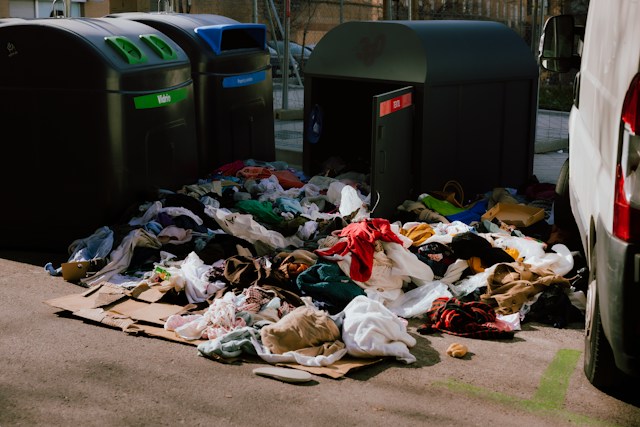
A six-month tracking study involving 200 GPS devices has revealed the complex international routes taken by used textiles collected in five Nordic countries, highlighting major gaps in transparency across the global second-hand clothing trade.
The research, conducted by Eunomia Research & Consulting, followed textiles collected in Denmark, Finland, Iceland, Norway and Sweden across 23 countries. The findings show that 71% of tracked items remained in Europe, while some lower-grade textiles travelled as far as Pakistan and Nigeria.
However, remaining in Europe did not necessarily mean reaching an end user. Many tracked garments passed through multiple sorting facilities, warehouses and transit hubs, particularly in Poland, Lithuania and Germany. Some had still not reached a clearly identifiable final destination after six months.
📊 Importantly, the study found no evidence of widespread dumping, uncontrolled burning or environmental leakage in Africa. Nevertheless, the researchers cautioned that the available data was insufficient to rule out such practices, underlining the need for better downstream monitoring.
The report also challenges calls for a blanket ban on textile exports. According to Eunomia, international trade can extend garment lifetimes, support employment and provide affordable clothing. The key challenge is ensuring that lower-quality textiles are properly managed after export.
To improve circularity, the researchers recommend stronger downstream accountability for exporters, minimum standards for receiving facilities, expanded regional textile recycling capacity and more transparent quality classification of exported materials.
The report also highlights Extended Producer Responsibility (EPR) as a way to shift the costs of collection, sorting, reuse and recycling towards companies placing textiles on the market. Fee modulation could reward products designed for durability, repair and recyclability.
The findings underline a growing challenge for the circular textile economy: tracking exported clothing is not enough. Effective oversight must extend across the entire supply chain, from collection and sorting to reuse and final recovery.
Image credit: unslpash+