

STEINERT AI enables food-grade tray recycling at Cirrec

Since April 2024, Cirrec (part of Faerch Group) has been processing 60,000 tonnes of PET trays/year—over 3 billion trays—into food-grade rPET. The key challenge: sorting visually similar but legally different materials.
The problem: looking the same, being different For food-grade rPET, EU Regulation 2022/1616 stipulates that only packaging which has already been in contact with food may re-enter the food cycle. A ready-meal tray is permitted; a blister pack for screws is not. Chemically, both are PET and therefore identical to conventional near-infrared (NIR) sorting systems.
"Achieving the stringent standard required for food-grade recycling has always demanded exceptional precision in sorting," says Simone Tirelli, Technical Project Manager at Faerch. "Here at this plant, we are committed to transforming plastic waste into valuable resources."
The solution: Cirrec uses three STEINERT UniSort PR EVO 5.0 systems with sensor fusion and AI. A hyperspectral NIR camera captures chemical composition, while a colour camera identifies visual features. Combined in the STEINERT Intelligent Object.Identifier (IOI), AI recognises food trays by shape, printing, and surface texture, achieving >95% purity.
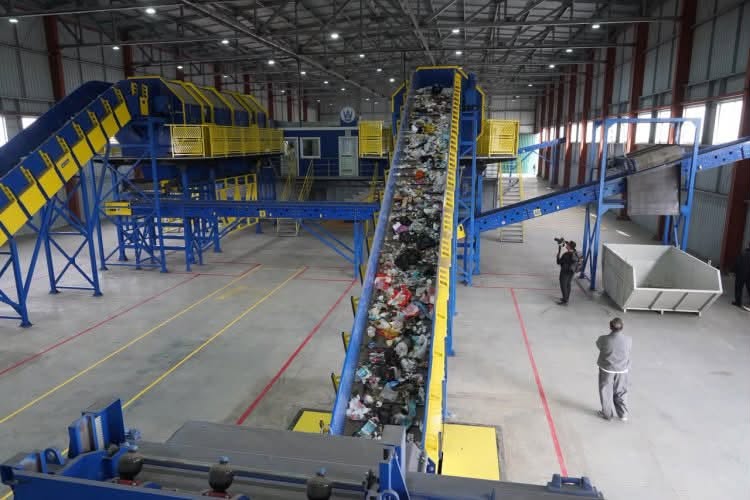
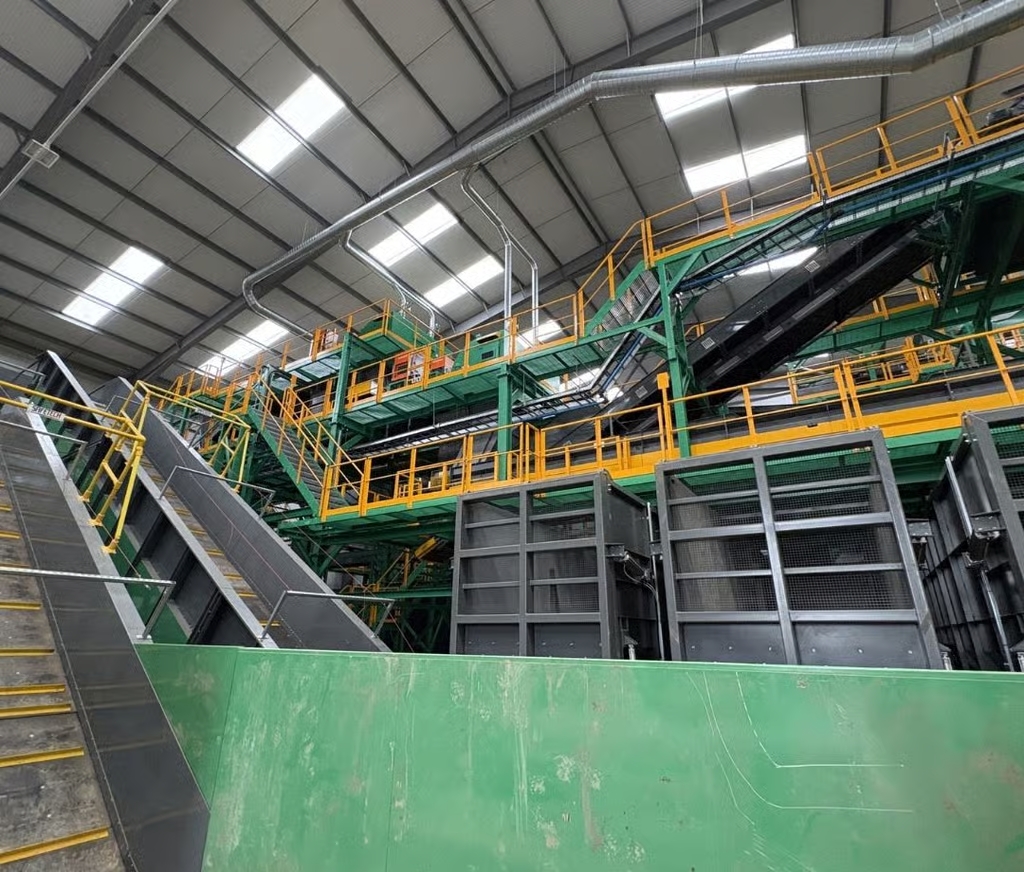
The process: Bales pass through magnetic separation (UME) and eddy current (CanMaster), then optical sorting → grinding → washing → flakes/pellets.
The results: rPET with ~70% recycled content reduces CO₂ emissions by 57% vs virgin PET. Cirrec is the only operator globally achieving industrial-scale tray-to-tray recycling, proving the circular economy works when sorting is precise.
Scalable AI: IOI adapts to new packaging without hardware changes, ready for industrial expansion.