

Mauritius Builds a New Waste Management System: An Inside Look
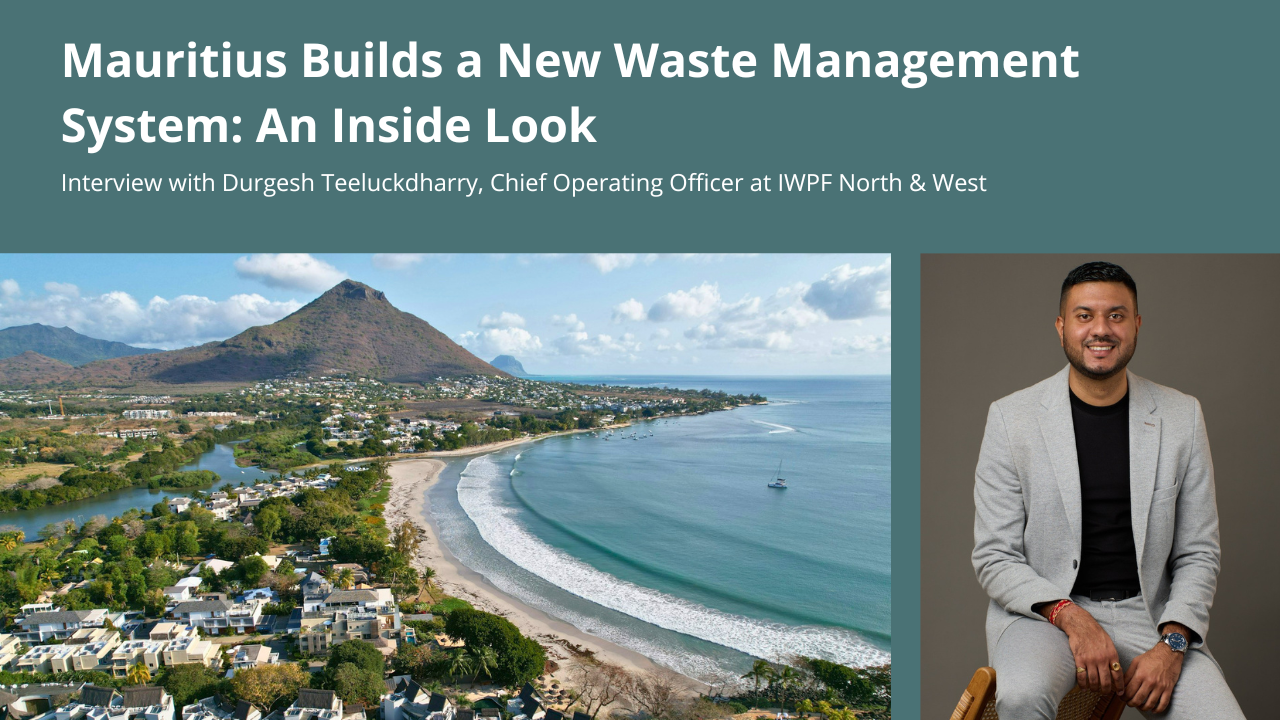
Mauritius is known for its beaches, lush landscapes and postcard-perfect scenery. But behind this image of a tropical paradise lies a growing waste management challenge. How is the island addressing it, and what does it take to build a more modern waste management system? We asked Durgesh Teeluckdharry, RPEM, Chief Operating Officer at IWPF North & West.
Q: The Integrated Waste Processing Facility (IWPF) programme is one of the largest waste management infrastructure projects in Mauritius. What challenges in the country's existing waste management system is it designed to address, and why is this project so important at this stage?
A: One of the biggest shifts Mauritius now faces is recognising that waste can no longer be viewed simply as something to collect and dispose of. Our current system remains heavily dependent on landfill, even though land is limited and a significant proportion of the material being discarded still has environmental and economic value. Organic waste can be transformed into compost, while paper, cardboard, plastics and metals can be recovered and returned to productive use.
The IWPF programme is designed to make that transition possible at national scale. The two facilities will have a combined processing capacity of 260,000 tonnes per year, with each facility designed to treat approximately 90,000 tonnes of source-segregated organic material and 40,000 tonnes of dry recyclable material annually. The programme is targeting a 73% reduction in the quantity of waste requiring disposal at Mare Chicose.
This is particularly important now because Mauritius is moving towards a more integrated waste-management model built around segregation at source, upgraded transfer stations, resource recovery and stronger markets for recovered materials. Infrastructure alone will not transform waste management, but without the right infrastructure, that transition simply cannot happen. The IWPF facilities are intended to provide the processing backbone needed to turn policy, collection systems and behavioural change into measurable results.
From an operational perspective, this is not simply the construction of two plants. It is the development of a complete national system that connects households, collection services, transfer stations, processing facilities, recyclers, agricultural users and public authorities. Every part of that system depends on the others functioning effectively. Its success will help preserve landfill capacity, reduce environmental pressure and create a more resilient circular economy for the country.
Q: The IWPF combines Material Recovery Facilities (MRFs) with industrial composting systems. Could you explain how the facilities will operate, what waste streams they will process, and what their overall treatment capacity will be?
A: The facilities are designed around a three-bin segregation system so that organic waste, dry recyclable material and residual waste can be managed through the most appropriate treatment route. From an operational standpoint, everything begins with the quality of the incoming material. The quality of segregation is essential because cleaner incoming streams lead to better recovery rates, higher-quality outputs and more efficient plant operation.
At each IWPF, approximately 90,000 tonnes of food and green waste will be processed annually through the composting facility. The organic material will first be received, inspected and screened to remove contaminants. It will then undergo an intensive controlled composting phase inside enclosed CompoBoxes, followed by a maturation period of approximately four to six weeks. The finished material will be screened and prepared for use as a soil improver in agriculture, landscaping and other suitable applications.
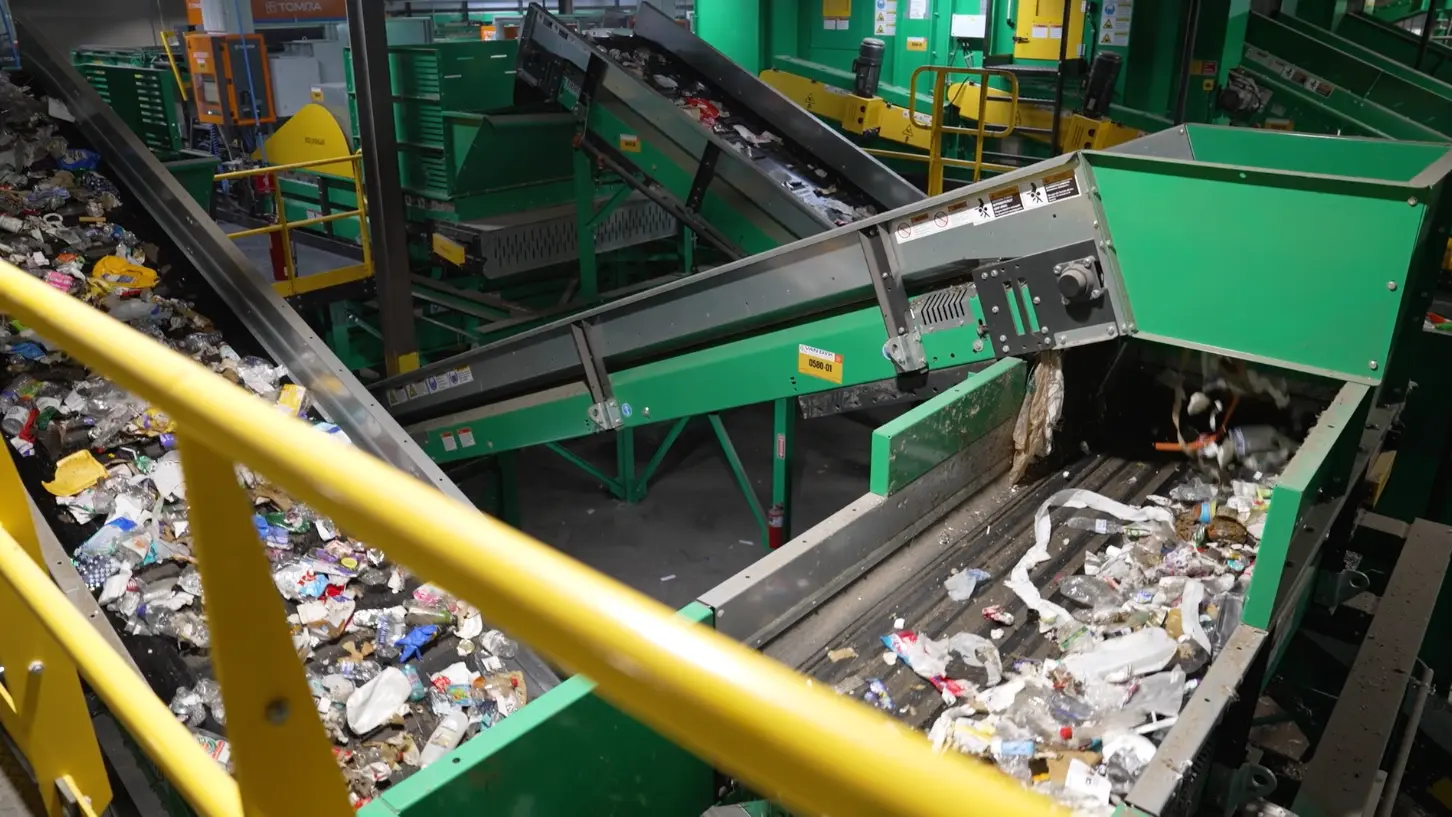
Each Material Recovery Facility will process approximately 40,000 tonnes of dry recyclable material per year. The line will separate paper, cardboard, plastics, ferrous metals, non-ferrous metals and other recoverable commodities through a combination of mechanical and sensor-based technologies. These materials will then be baled or stored for onward supply to recycling and manufacturing markets.
Each facility therefore has a design capacity of 130,000 tonnes per year, giving the North and West facilities a combined capacity of 260,000 tonnes annually. The objective is not simply to process waste efficiently, but to recover the greatest possible value from every suitable material entering the facilities. Only the unavoidable residual fraction should proceed to controlled final disposal.
Q: What technologies and equipment have been selected for the project? Which solutions will play the biggest role in maximising material recovery and the treatment of organic waste?
A: When selecting the technologies for the IWPF programme, our objective was never to assemble the most complex processing line available. It was to select proven solutions that could perform reliably under Mauritian conditions over the full life of the concession. Our technology strategy has therefore been guided by four priorities: proven performance, suitability for Mauritian waste conditions, maintainability over the full concession period and effective transfer of knowledge to the local operating team.
The Material Recovery Facilities will use an integrated processing line comprising feed preparation, shredding where required, fines screening, ballistic separation, magnetic separation, eddy-current separation, optical sorting, baling, storage bunkers and modular conveyors. Optical sorting will be one of the most important technologies because it can identify and separate targeted materials with a high level of consistency. Ballistic separation will distinguish flat and lightweight materials from heavier three-dimensional items, while magnetic and eddy-current systems will recover ferrous and non-ferrous metals.
For the organic stream, the core technology is the Controlled Microbial Composting process developed by Compost Systems. The enclosed CompoBox system combines controlled aeration, temperature monitoring, moisture management and mechanical turning. Digital monitoring and control systems allow the operating team to follow the biological process closely and adjust aeration and other parameters as the material progresses through treatment. Environmental protection is built into the technology. Extracted air will be treated through washing and biofiltration, while rainwater, leachate and process water will be collected and managed through dedicated systems.
Technology provides the capability, but it does not guarantee performance. Sustained performance will come from disciplined commissioning, competent operators, preventive maintenance, critical-spares planning and continuous optimisation based on operating data. In the long term, operational excellence is achieved through consistency rather than complexity.
Q: What performance targets have been set for the facilities? What level of resource recovery, landfill diversion and operational efficiency do you expect once the plants are fully operational?
A: The programme is focused on measurable outcomes rather than simply the amount of waste entering the facilities. The first key target is throughput: 260,000 tonnes per year across both sites, comprising approximately 180,000 tonnes of source-segregated organic waste and 80,000 tonnes of dry recyclable material. This represents an average of about 712 tonnes per calendar day across the programme, with actual daily processing aligned to the approved operating schedule.
The second major target is landfill diversion. The programme is designed to reduce waste disposal at Mare Chicose by 73%. Within the recyclable stream, the technical target is to recover more than 95% of the recyclable commodities presented to the MRF, subject to the quality and contamination level of the incoming material. The facilities are also projected to produce approximately 67,000 tonnes of compost each year.
For me, however, performance is not measured by throughput alone. Performance is equally reflected in the quality of the recovered materials, the consistency of the compost produced and the confidence that downstream users can place in those outputs. Ultimately, the value of the facilities will be measured not only by how much they process, but by how much they successfully return to productive use.
Environmental performance will also be monitored across odour, air quality, noise, water management, occupational health and safety and other relevant parameters.
Operational efficiency will depend on stable throughput, high plant availability, energy and water efficiency, effective maintenance, standardised components, reliable spare-parts management and real-time process monitoring. My role as COO is to ensure that these targets are translated into disciplined operating procedures, accountable teams and measurable day-to-day performance. That is how long-term performance is sustained over the life of the concession.
Q: Delivering a project of this scale requires close coordination between government, investors, technology suppliers and contractors. What have been the biggest technical, engineering or operational challenges in bringing the project from concept towards construction?
A: Without hesitation, I would say the biggest challenge has been integration. A programme of this scale cannot be delivered through isolated workstreams. Land, environmental approvals, source-segregation policy, transfer-station logistics, financing, detailed engineering, technology procurement, construction planning, commissioning and future operations all need to progress in a coordinated manner. If one element falls behind, it inevitably affects the others.
From an engineering perspective, the selected technologies must be adapted to the realities of Mauritius rather than installed as standard overseas solutions. The design must reflect the expected composition, moisture content and contamination levels of local waste, the tropical climate, available utilities, site constraints and environmental requirements. Civil works, mechanical equipment, electrical systems and process controls must operate as one integrated facility.
The most important operational dependency is segregation at source. The facilities are designed to receive distinct organic and dry recyclable streams, which means public awareness, collection discipline and contamination control are fundamental. This requires more than asking households to use different bins. It also requires coordinated collection routes, upgraded transfer stations, clear contractor responsibilities, reliable data and consistent quality controls throughout the chain.
Another major challenge is developing the market ecosystem around the facilities. Recovery does not end when a material leaves the processing line. We need dependable markets for compost and recyclable commodities, clear quality specifications and constructive collaboration with existing recyclers, collectors and recovery actors. The aim is to strengthen the wider sector and create additional value from the material that Mauritius currently discards.
Finally, the project must earn public confidence. Transparent engagement and credible management of traffic, odour, noise, water, emissions and health-and-safety risks are essential. Public confidence is not built through promises alone. It is built through consistent performance, transparency and responsible operations over time. The complexity of the development process has been demanding, but it has also strengthened the programme by ensuring that the key assumptions are properly tested before construction and long-term investment commitments are made.
Q: The IWPF is being developed under a 27-year Build-Own-Operate (BOO) concession model. What advantages does this approach offer for developing long-term, sustainable waste management infrastructure in Mauritius?
A: The principal advantage of the Build-Own-Operate model is whole-life accountability. The concessionaire is responsible not only for designing and constructing the facilities, but also for financing, owning, operating and maintaining them throughout the 27-year concession period. That fundamentally changes the way decisions are made from the very beginning of the project. Decisions taken during design and procurement have a direct impact on the performance that must be delivered over several decades.
This creates a strong incentive to invest in reliable equipment, maintainable plant layouts, energy and water efficiency, preventive maintenance and workforce capability. The focus is not limited to reducing initial construction cost. It is on achieving the best long-term balance between capital investment, operational performance, maintenance requirements and service reliability.
The BOO structure also provides clearer risk allocation and a single point of operational responsibility. Government establishes the service standards, environmental obligations and performance requirements, while the concessionaire mobilises private capital, technology and specialist expertise to deliver those outcomes. Performance can then be monitored throughout the concession rather than ending at construction handover.
For Mauritius, the long concession period is particularly valuable because this programme involves sustained technical, institutional and behavioural change. It creates the time and accountability needed to transfer knowledge, develop a skilled local workforce, improve operations continuously and build stable markets for recyclables and compost. In practical terms, it creates an environment where long-term performance matters just as much as successful delivery. It aligns investment and operations around long-term public value.
Q: Looking ahead, how do you see the IWPF programme transforming Mauritius' circular economy over the next decade? Could this project serve as a model for other island nations facing similar waste management challenges?
A: The IWPF programme has the potential to become one of the foundations of Mauritius' circular economy, but its impact will extend well beyond the boundaries of the two sites. When people think about waste infrastructure, they often focus on the facilities themselves. In reality, the facilities are only one part of a much broader system. A successful circular economy depends on a complete chain: segregation at source, reliable collection, upgraded transfer stations, modern processing, recognised product standards, committed offtakers, informed consumers and consistent public policy.
Over the next decade, the programme can help establish that chain. It can reduce the volume of waste requiring landfill disposal, create a stable supply of recovered materials, produce compost for soil improvement, develop specialised technical skills and generate better information on national material flows. These outcomes can support new businesses, local value addition and more informed environmental policy.
The programme can also demonstrate that strong environmental performance and commercial discipline can reinforce each other. A well-operated facility must protect nearby communities, comply with environmental standards, deliver a reliable public service and produce outputs that have genuine economic value. That combination is essential for circular infrastructure to remain sustainable over the long term.
Other Small Island Developing States face many of the same constraints as Mauritius, including limited land, dependence on a small number of disposal sites, high logistics costs and restricted end markets. A model combining source segregation, regional processing facilities, long-term private-sector accountability and strong public oversight can therefore provide valuable lessons for other islands.
The experience developed through the IWPF may also support the advancement of sustainable waste infrastructure elsewhere in Africa. Our first responsibility, however, is to deliver the Mauritian programme safely, transparently and to the expected standards. If we achieve that, I believe the programme will speak for itself. The IWPF can become both a national success and a credible regional reference for transforming waste challenges into long-term resource opportunities.
Images credit: open source, Unsplash