

UAE Circular Landscape on Asia Pacific Circular Economy Round Table 2025

Special for Circular Economy News
Sunil Thawani, CEO, Non-Executive Board Member, Founder of Circular Economy Award (UAE), answers our questions.
1. As the organizer of the Circular Economy Award in Dubai (April 2026), what topics and issues were you most interested in discussing during the APCER roundtable? What was the focus of your presentation?
As the main focus of the Roundtable was countries from Asia Pacific region, the organizers designed a special session to present a review of each country's circular economy and emerging trends from the region. Cambodia, India, China and the Philippines were among the participating countries. I presented the UAE circular landscape and supported it with real-life case studies.
These included the UAE's Circular Economy Polict 2021–2031, the establishment of the Circular Economy Award with its criteria and process, as well as examples from Kimoha Entrepreneurs FZCO in Dubai, which prints airline boarding passes using FSC-certified recycled paper and water-based ink and designs airline tags with less plastic to reduce environmental impact. I also highlighted contribution of Ehfaaz, who turns waste into value . They repurposed 1.1 million kgs of food waste under the UAE Food Security Strategy 2050, avoiding 29 million kg of CO₂e.
2. What key themes and discussions took place during the event?
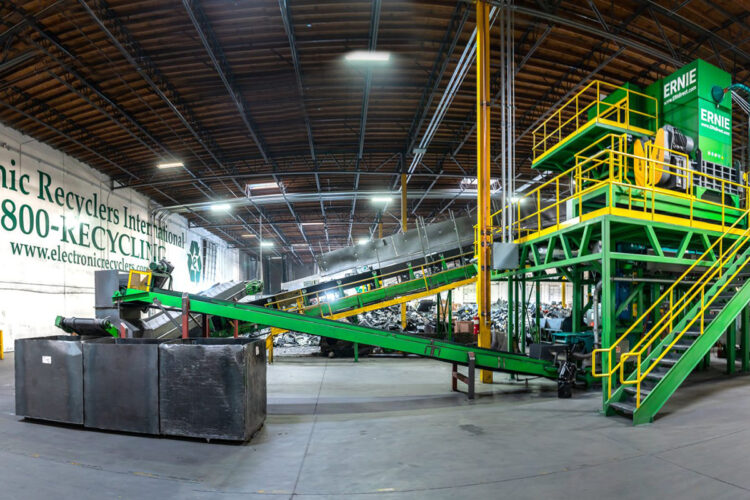
APCER, co-hosted by the Taiwan Ministry of Environment, Agriculture, Economic Affairs, and the Circular Economy Network, focused on highly polluting sectors such as construction, electronics, agribusiness, textiles, plastic, packaging, energy, and critical materials. Sessions also explored financing mechanisms and Extended Producer Responsibility. A key highlight of the event was visiting a zero-waste manufacturing center of TSMC (Taiwan Semi Conductor Manufacturing Company) and Byte International's pioneering recycling facility. Leaders, businesses, and experts from many participating countries delivered presentations, sharing best practices, their learning lessons with deep insights.
3. What are the main takeaways from the event, and what insights or ideas would you like to bring into your own project?
Leadership at all levels, political, national, corporate, is essential for accelerating circularity. There are still many obstacles to trade and material flows between countries. Rapid scaling up of new products and innovations from waste is challenging. Return on investment in circular projects remains low, which is a major deterrent challenge for entrepreneurs. Circular products are more expensive than traditional ones, consumer behavior changes slowly, and variability of used materials poses technical challenges for consistent product quality. Despite these obstacles, policies, companies, financing, and innovations supporting circularity continue growing, providing hope and optimism on our path to net zero.
4. Do you expect that some of the participants from this event will also take part in your upcoming Circular Economy Award?
Yes, there was a lot of interest about the award and its criteria. Interestingly, Taiwan also has an award to promote Circular Economy. I met the leaders and managers of the Taiwan Circular Economy Award, and we agreed to collaborate to share our experiences and work together. We sincerely thank Mr. Sunil Thawani for sharing his insights and experiences. His perspective on circular economy initiatives and innovations was truly inspiring.
#CircularEconomy #Sustainability #UAE #Innovation #APCER2025 #CircularEconomyAward #SustainableBusiness #ZeroWaste #GreenTech #EnvironmentalLeadership #CircularSolutions #SustainableDevelopment #EcoInnovation