

STADLER Japan: Priorities for the Next Three Years and Market Outlook
STADLER is strengthening its presence in Japan with the establishment of its own subsidiary. We spoke with Megumi Sasaki, Project Director for Stadler Japan Setup, about why this step has become possible now, how the Japanese recycling market is evolving, and what role modern sorting technologies can play in the transition toward a circular economy.
Q; STADLER has been active in the Japanese market for more than a decade. Why was now the right moment to establish a fully dedicated STADLER Japan subsidiary, and what opportunities do you see today that were not present in the market ten years ago?
A: Historically, Japan has focused more on incineration than on recycling when dealing with waste. During the rapid economic growth period, the population expanded sharply, and Japan shifted within a short period from its traditional "Mottainai" philosophy to an urban lifestyle of mass production and mass consumption. At the time, this approach was considered the right choice.
The Containers and Packaging Recycling Law was enacted in 1995, and it took another 12 years for NIR (near-infrared) sorting machines to expand into the market. Although Japan has been steadily shifting toward separate collection and recycling, the authority still remains with individual municipalities. Furthermore, because the 1970s legal framework centered on localized waste management is still in effect, it has been difficult to fully adapt to material recycling. As a result, sorting plants have remained small-scale and limited compared to those in Europe, and there was little demand for dynamic, large-scale facilities like those supplied by STADLER Group.
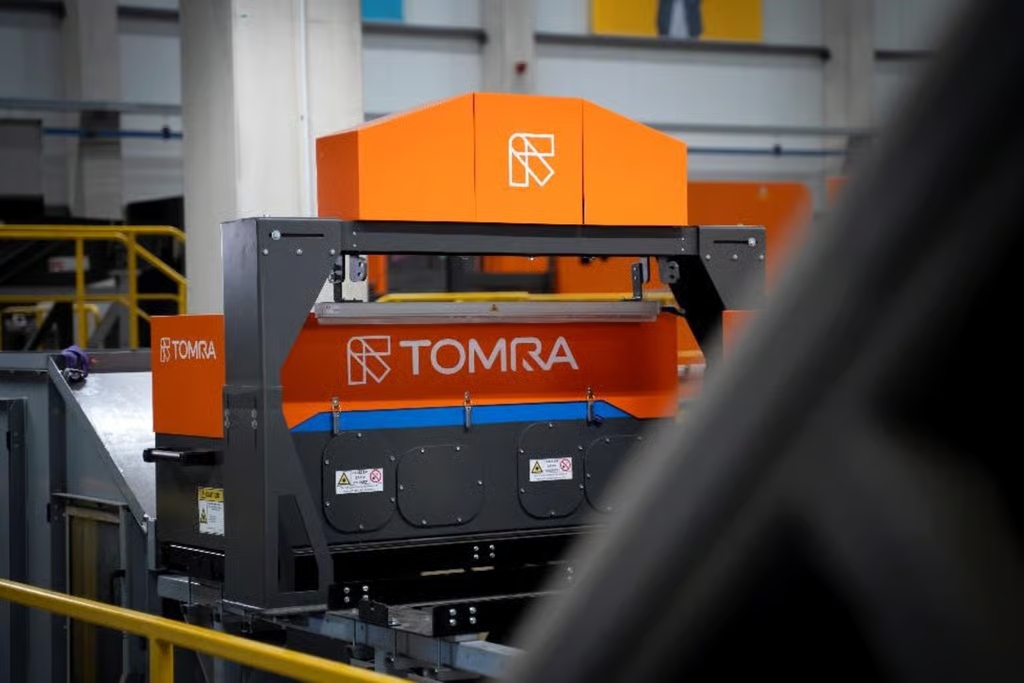
On the other hand, ballistic separators have been widely used since around 2015, as there is strong demand for them as a pretreatment step to ensure the effective operation of NIR sorting machines.
With the enactment of the Plastic Resource Circulation Act in 2022 and insights gained from European examples of horizontal recycling, Japan is now at a stage of building a framework for its future direction. Along with this shift, there has been an increase in the number of people from Japan wishing to visit STADLER plants, as well as a growing number of customers expressing interest in building new facilities together.
Japan is a country built on technology, where the quality and precision of after-sales service are highly valued. Furthermore, given the geographical distance from Germany, we believe that establishing a Japanese subsidiary is essential to provide customers with the peace of mind they need when considering our plants.
At present, the decision on whether to separately collect and recycle container and packaging plastics is left to individual municipalities. Unfortunately, about half of these municipalities choose to continue with traditional incineration instead of implementing separate collection. As regional populations decline and various costs increasingly burden local governments, we believe that promoting MIX MSW collection and pre-incineration sorting will lower overall costs and improve recycling rates.
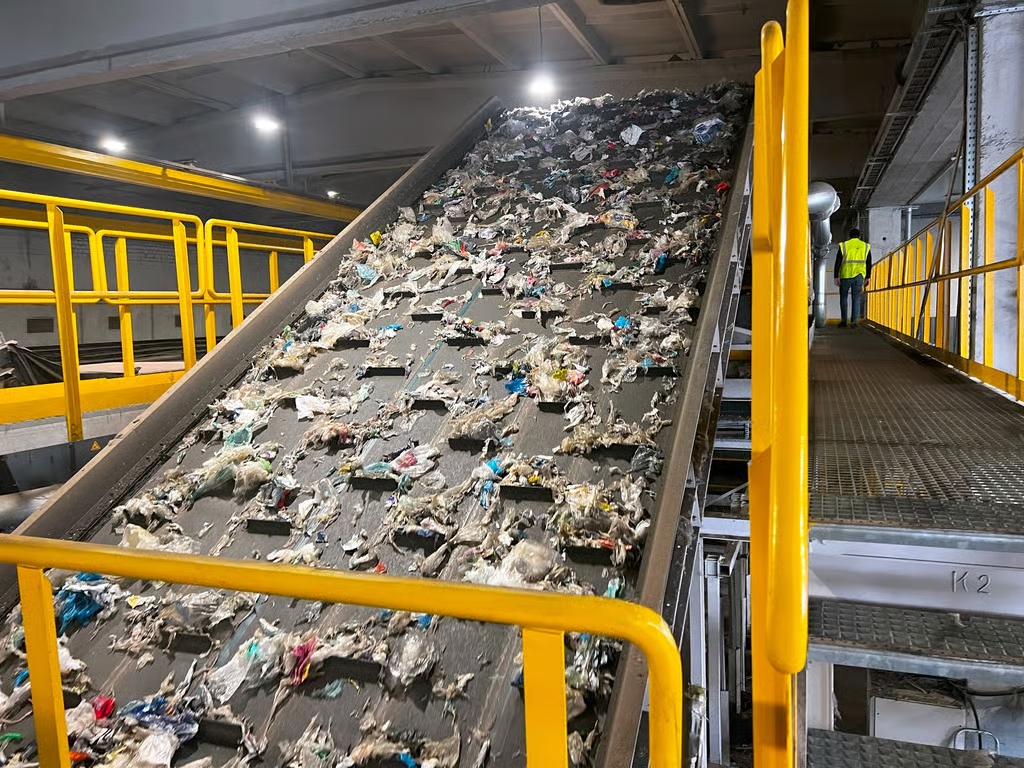
Furthermore, by introducing automated sorting plants capable of detailed separation into the Japanese market—where complex and multi-layer materials are common even among packaging plastics—we believe we can significantly increase the utilization and value of recycled materials.
Q: Japan has historically relied heavily on thermal waste treatment, with a significant share of global incineration capacity located in the country. How do you see modern sorting technologies contributing within this system, and do you see potential to increase material recovery before energy-from-waste treatment?
A: It is a fact that Japan remains highly dependent on incineration, to the extent that thermal recovery is still commonly referred to as "recycling." It is also true that the proportion of multi-layer and complex materials is significantly higher than in Europe, meaning a large amount of material is inherently unsuitable for material recycling.
However, this does not mean we should simply sit back and route potentially recyclable, high-quality materials directly into thermal utilization. By establishing an optimized, coordinated workflow—where resources that can be properly reclaimed are funneled back into the recycling stream via pre-incineration sorting, and only the rejects from the separate collection and recycling processes are sent for thermal recovery—I believe we can successfully expand material recovery and reclamation.
Q: The Plastic Resource Circulation Act is setting new directions for the industry. What changes in waste management and plastics recycling do you consider most significant for the Japanese market in the coming years?
A: Historically, Japan's recycling approach focused primarily on "how to treat waste once it is generated." However, this law aims to keep resources circulating continuously throughout the entire lifecycle—from the design and manufacturing of plastic products to their sale, collection, and recycling.
Currently, a major challenge in Japan is establishing effective collaboration between the "arterial" industry (manufacturers) and the "venous" industry (recyclers). Regrettably, the reality is that new and increasingly complex materials are being developed every day to meet various product-specific requirements, which in turn makes the recycling process more difficult day by day.
Driven by this legislation, it is crucial to spread the philosophy that "recycling begins with design" and to ensure that Eco-Design principles become deeply integrated into the industry. In fact, since the enactment of this law, we have seen an increase in consultations from brand owners regarding recycling, as well as their active participation in various demonstration projects across Japan.
Q: STADLER’s portfolio covers light packaging sorting, MSW sorting, plastics recycling and PET presorting, metal recycling solutions, as well as integration of sorting systems alongside Waste-to-Energy infrastructure. Which of these technologies and areas do you expect to be most in demand in Japan in the coming years, and which technologies do you believe will have the greatest impact on the development of Japan’s waste management system over the next 5–10 years?
A: We expect demand across all of these areas, though each will have its own timing and strategic target.
For the private sector, we are already moving forward with specific projects in light packaging sorting and PET presorting. Among these, I believe light packaging sorting will have the greatest impact on the market. Leveraging our European experience combined with deep insights into Japanese material characteristics gained from our local activities, we plan to propose fully automated sorting lines that are reliable, precise, and continuously high-performing.
As for MSW sorting and Waste-to-Energy (WtE) integration, these involve municipal projects, so it will take some time to get the concepts approved and officially adopted. However, from the perspective of labor saving and cost reduction, this is a crucial area that will be indispensable in the medium term.
Furthermore, research into chemical recycling is advancing rapidly in Japan, and we foresee a strong demand for our systems to handle the pretreatment and presorting stages for these processes as well.
Q: Looking ahead, what are STADLER Japan’s key priorities over the next three years, and what will define success for the company in the Japanese market?
A: Over the next three years, our absolute top priority will be introducing plants capable of high-precision sorting that leads to the utilization of recycled materials, specifically in the packaging plastics sector, which is currently undergoing a major transition.
I believe that defining "success" in Japan comes down to three major pillars:
1. Finding strong partners who share the same goal of realizing a circular economy in Japan. This applies to our customers, suppliers, academia, and future employees alike. Rather than chasing short-term success directly in front of us, it is vital to build a network of allies who can collectively face and work toward what our future ought to be.
2. Promoting current optimal solutions while respecting traditional practices. For the somewhat conservative Japanese market, changing established systems or adopting foreign success stories as-is is no easy task. However, I want to contribute to material recycling by carefully explaining that what was once impossible is now achievable thanks to technological evolution.
3. Inspiring people to love STADLER just like a local Japanese company. I believe there is a strong alignment between Japan's culture, which deeply values personal connections, and the philosophy of STADLER as a family-owned business spanning seven eighth generations. I want us to truly blend into the culture and market, to the point where people might eventually ask, "Wait, isn't STADLER a Japanese company?"