


Q&A | Data, Sorting and Scale: Rethinking the Future of Textile Recycling
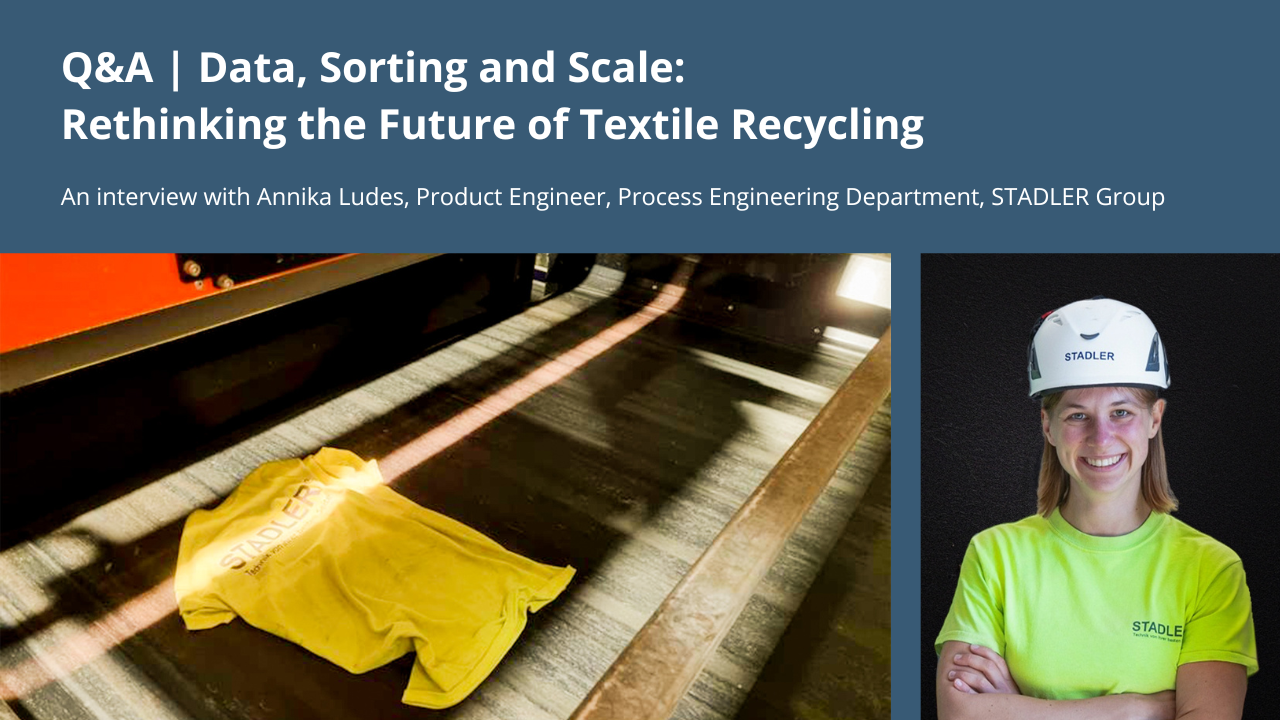
Europe is investing heavily in textile circularity, while Digital Product Passports (DPPs) are increasingly seen as a key enabler of more efficient textile recycling. But is the lack of product-level data really the industry's biggest challenge?
We spoke with Annika Ludes, Product Engineer at STADLER Group, about the real barriers to scaling textile-to-textile recycling, the role of advanced sorting technologies, and why practical implementation matters more than simply collecting more data.
Q: Can textile-to-textile recycling scale without reliable product-level data?
Annika Ludes:
In my view, textile-to-textile recycling does not necessarily depend on the availability of reliable product-level data. For many recycling applications, the most important information is the material composition and, depending on the process, the colour of the textile. These parameters can already be identified using existing sorting and recognition technologies.
I would therefore not describe missing product-level data as the main bottleneck for textile-to-textile recycling.
The real challenge is whether collected textile waste can be sorted into sufficiently clean and consistent fractions that meet the requirements of the respective recycling processes.
Data can certainly be valuable when it is accurate, accessible and operationally useful. However, more data does not automatically result in better recycling. The key question is whether the information improves sorting and recycling decisions. In many cases, the necessary information can already be detected directly from the textile itself.
Q: What is currently the biggest barrier to increasing high-quality textile-to-textile recycling volumes in Europe?
Annika Ludes:
One of the biggest barriers is the availability of sufficient volumes of high-quality feedstock.
Textile waste streams are highly heterogeneous and contain a wide variety of fibre blends, colours, finishes, contaminants, accessories and product constructions. This complexity makes it difficult to generate the consistent input qualities required by recycling technologies. The market also faces considerable uncertainty about future textile waste streams, including volumes, product types and material composition.
At the same time, Europe still lacks sufficient industrial-scale recycling capacity for many textile fractions. Not every textile currently described as "recyclable" has a commercially available recycling process.
In addition, the input requirements for many recycling technologies are still not sufficiently defined. It must become much clearer which materials each recycling process can accept, tolerate within certain limits or exclude altogether.
The industry also needs common definitions, measurement methods and quality standards between collection, sorting, pre-processing and recycling.
Ultimately, the principle is simple: if the input quality is poor, the output quality will also be limited. High-quality textile-to-textile recycling starts with high-quality, well-sorted feedstock.
Q: How do you see the role of Digital Product Passports in improving textile sorting, traceability and recycling efficiency?
Annika Ludes:
I am rather cautious about the role of Digital Product Passports in textile sorting itself.
In principle, DPPs can improve transparency and traceability, but they do not automatically provide the information that is most relevant for recycling.
Several practical questions remain. Who ensures that the information is correct and up to date? How will it be stored and accessed by sorting facilities? And will the information still be available after years of use, repair, resale or export?
Existing sensor-based sorting technologies can already identify essential information directly from the textile itself, including fibre composition and colour. This allows sorting decisions to be based on the physical characteristics of the product rather than on external data that may be incomplete or outdated.
This also presents practical challenges, as labels or identifiers can be removed, damaged or become unreadable over time. Another limitation is that sorting facilities will continue to receive large volumes of legacy textiles without Digital Product Passports for many years. Recycling systems therefore cannot rely exclusively on DPPs.
Digital Product Passports can become an important tool for transparency and regulatory compliance, but they should not be considered the core solution for textile-to-textile recycling. We should be careful not to create more and more data structures without ensuring that the data is actually usable in practice. The focus should remain on systems that work reliably under real operating conditions.
Q: What changes are needed to accelerate textile circularity in Europe?
Annika Ludes:
Accelerating textile circularity requires coordinated action across the entire value chain.
Products should increasingly be designed for durability, repairability and recyclability. Collection and sorting infrastructure must continue to expand and modernise to handle growing textile volumes while producing higher-quality material fractions. Stronger market demand for recycled fibres is also needed to support investment in recycling capacity. Without reliable demand, it will be difficult to scale sorting and recycling infrastructure economically.
Regulatory initiatives such as Extended Producer Responsibility (EPR) schemes can provide important incentives and help define responsibilities across the system. The industry can also learn from established recycling systems, such as packaging waste systems in Germany, while recognising that textiles require solutions tailored to their own specific challenges.
Unlike many other material streams, textiles are produced globally, while waste is generated locally or traded internationally after use. This makes circularity inherently more complex and highlights the importance of smart logistics. Circular textile systems should not simply shift environmental or economic burdens to countries already under pressure from global textile production and waste flows. Instead, circularity must be built in a way that is fair, transparent and technically feasible across the value chain.
At the same time, we should also ask what the ultimate objective is. Recycling is important, but it should not replace waste prevention, longer product lifetimes, reuse and better product design.
Ultimately, textile circularity cannot be achieved by a single technology or stakeholder. It requires an integrated ecosystem connecting product design, collection, sorting, recycling, market demand and regulation. Collaboration between brands, collectors, sorters, recyclers, technology providers and policymakers will be essential to making that system work.
Q: Looking ahead, what will determine the success of textile recycling?
Annika Ludes:
From my perspective, the future of textile recycling will depend less on a single solution and more on the interaction between reliable sorting technologies, sufficient recycling capacity, automation, clear quality standards and sustained demand for recycled fibres.
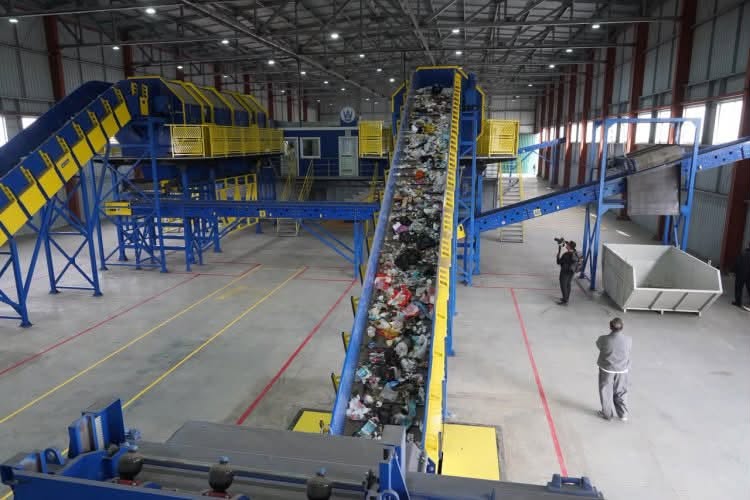
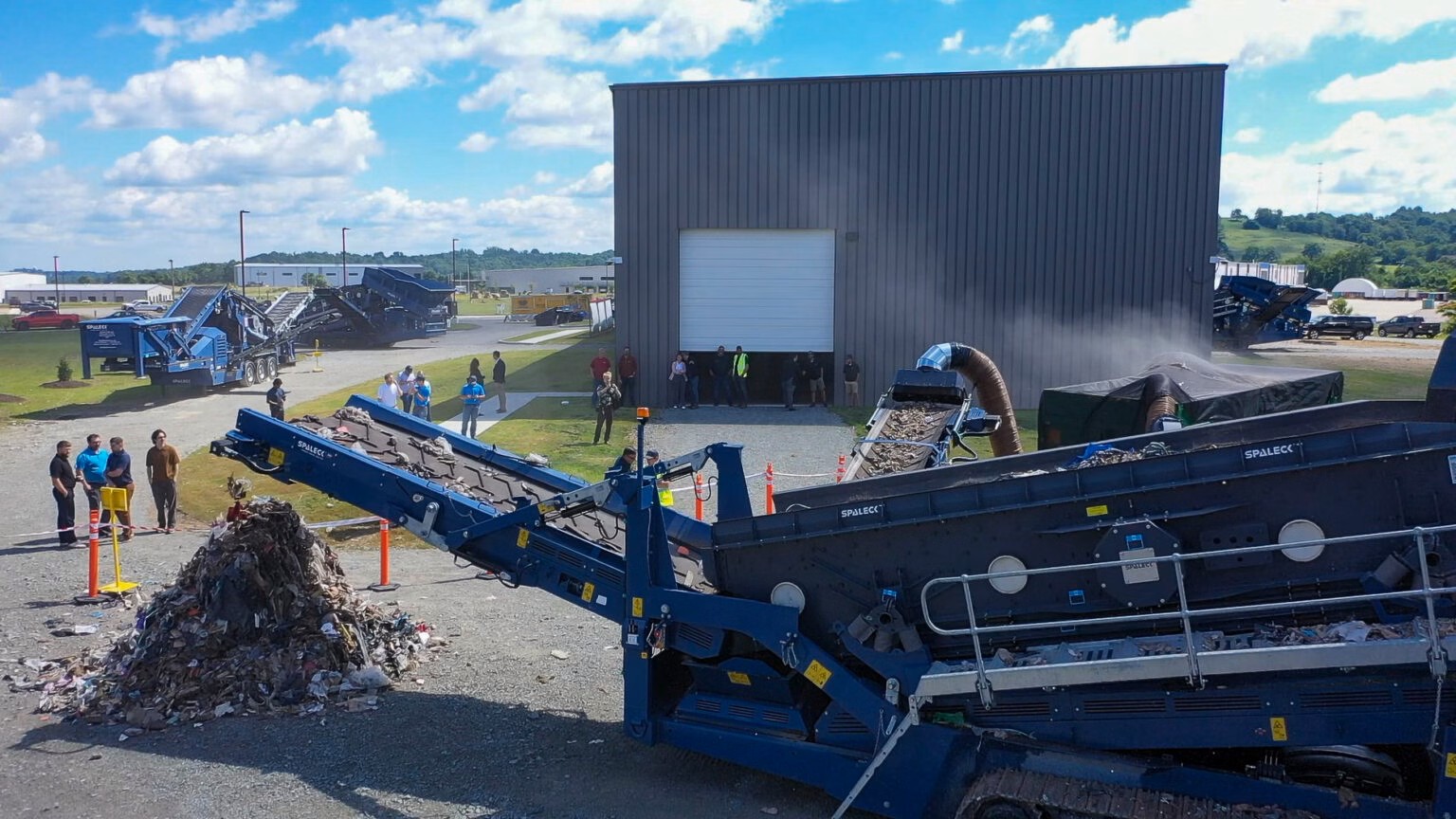
Sorting will continue to play a central role as the critical link between textile waste collection and recycling. Recycling technologies require consistent input material, and this can only be achieved through robust, sensor-based sorting systems capable of producing high-quality fractions at scale.
At the same time, the industry needs to move from discussion to implementation. Rather than simply creating more data, studies or information, we should focus on what is truly relevant, how it can be be used in practice and how sorting and recycling systems can operate successfully under real market conditions.
Ultimately, the priority should be building practical, scalable systems that can process real post-consumer textile waste-including mixed, old, damaged and incomplete products—through strong collaboration across the entire value chain.