


Automated Textile Sorting Scales Up at Textile House Slovakia
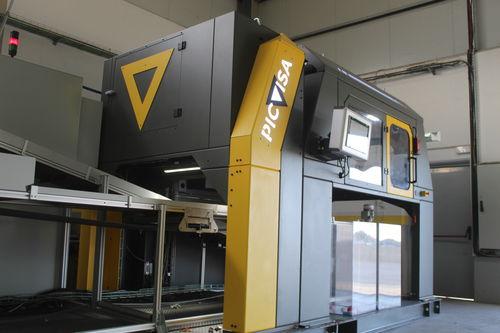
Textile House Slovakia is processing more than 100 tonnes of textiles per day at its sorting centre, using PICVISA’s ECOSORT technology to automate fibre sorting.
How ECOSORT works
The system analyses textiles on the conveyor using NIR spectroscopy to identify fibre composition and VIS technology to analyse colour. Deep learning can also classify garments by shape.
After analysis, targeted materials are separated using ejection nozzles. ECOSORT can identify fibre types including cotton, polyester, viscose, wool, polyamide, acrylic and silk, as well as blended materials.
From sorting to new products
The sorted materials are directed into different reuse and recycling streams. Textile House has developed products including cover mats made from synthetic sweaters, cotton wipers and upcycled pillows using recycled down feathers.
The case shows how automated sorting can connect textile collection with more efficient reuse and recycling processes.
Source: PICVISA